
“Units with this special rule may be deployed after all other units from both armies.
They can be deployed anywhere on the battlefield that is more than 12″ away from an enemy model. If deployed in this way, Scouts cannot declare a charge during their first turn.
If both armies contain Scouts, a roll-off should determine which player deploys Scouts first. The players then alternate deploying their scouting units one at a time, starting with the player who won the roll-off.”
Differences with Warhammer Fantasy
In previous editions, you could deploy closer to or farther from the enemy depending on whether you were inside their line of sight or not. That’s no longer how it works. Now you must always deploy more than 12 inches away from the enemy.
It doesn’t matter whether you’re hiding behind cover or not.
The Big Problem with Scouts
The issue is that, whether you go first or not, if you deploy your unit as Scouts you cannot declare a charge during your first turn.
So if you’re trying to use them to control an area or push an enemy away from a zone, it can completely backfire, because it often does the exact opposite of what you intended.
If the enemy knows you can’t charge them, they can march at full movement toward that area knowing they’re safe — and you might even end up blocking one of your own units from making a key charge.
It’s Not Autoplay; Deployment mages
In that sense, just like Vanguard moves, having the Scouts rule doesn’t mean you should automatically use it every time. You need to evaluate when it’s worth it and when it isn’t.
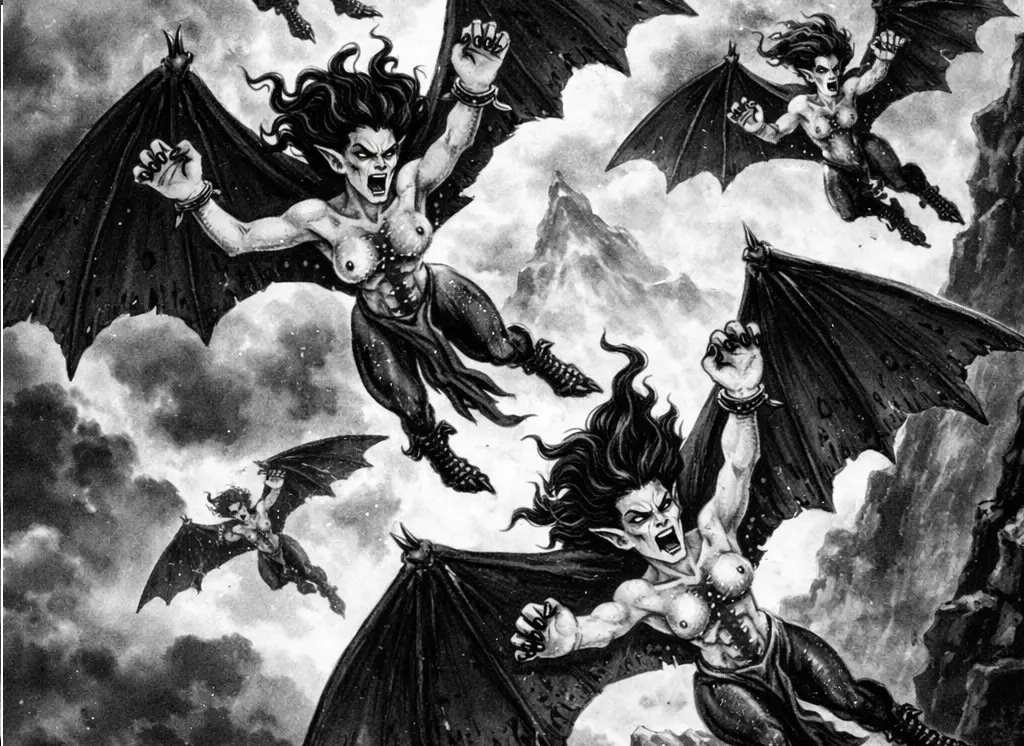
For example, these units are usually small units, like 5 Harpies from Dark Elves or Beastmen, which come with this rule as standard.
One of the advantages of these small units is that you can deploy them early, forcing your opponent to place their stronger units first so you can see where they’re going. That way, you can adapt your deployment of your more powerful and less mobile units, since Harpies move a lot and can fly. This means they can completely reposition themselves in a single turn.
There’s another downside: the last player to finish deploying Scouts gives the opponent a +1 to choose who goes first (this comes from the FAQs).
Unless you’re playing against Bretonnia — they’ll be praying 100% of the times.
Define the Role of Scouts When You Build Your List
This is something you absolutely need to keep in mind. If you’re running an MSU with lots of small units, your opponent will have the +1 in 90% of games anyway, so this isn’t really a disadvantage for you. But in many other cases, you should count the drops your opponent will have before deciding whether to deploy as Scouts or not.
It’s also very important to understand — and this is actually a big advantage of the rule — that you don’t have to declare at the beginning of deployment whether a unit will deploy as Scouts. When it’s time to place them, before characters, you decide whether to deploy them normally or keep them back and deploy them as Scouts afterward.
Countering the “Anti-Fly” Banner
Another situation where I’ve seen the Scouts rule shine — especially combined with flying units like the Harpies mentioned earlier — is when your opponent has one of those banners or horns that have supposedly become so popular lately (irony, almost no one actually uses them) that prevent the enemy from using Fly for a turn.
That way, you guarantee the charge on turn 2.
Let me explain: if you deploy your Harpies in your deployment zone thinking you’ll be able to march and position yourself very close to the enemy war machine to guarantee a charge, your opponent might activate the banner. That means you’ll only be able to move on the ground, walking, without using your full flying movement — allowing their cannon to fire one extra turn.
Redirecting Deathstars
You’re placing a redirector from turn 1 without depending on whether you go first or not.
How good is that?
As we’ve said before, having the Scouts rule doesn’t automatically mean it’s always beneficial to use it. But there are certain situations — and certain units — where using it is worth it 80% of the time. For example, when your unit is meant to disrupt enemy movement.
If you place Harpies (or Dark Riders) 12 inches away from the enemy, you can prevent, for example, their cavalry — which usually moves around 16 inches — from freely advancing. In many cases, to clear that unit out of the way and march with the rest of their army, the opponent will declare a charge just to force you to flee.
At that point, it’s up to you to decide whether to flee or not depending on what charged you. You need to evaluate the outcome: the probability they wipe you out, the probability they overrun, the probability they don’t destroy you and instead pursue, or whether it’s better to flee and rely on your General’s Leadership to regroup. Remember, units can march after regrouping in this edition — and even shoot.
Count the Drops When You Build Your List
To wrap this up, when building your army list, you need to think about whether Scouts actually fit your army’s game plan (learn how to build a list with this post).
In many cases, I’ve seen fairly experienced players build block-style lists with very few Scouts.
Keep in mind that a low-drop list is usually designed to go first, seize the initiative, and overwhelm the opponent quickly. Then they include a Scout unit and deploy it as such, which means they lose the advantage of having fewer drops — even if the opponent is running an MSU with 40 units.
Anyway, I hope you found this useful.
If you share it with your community, I’d really appreciate it.
And maybe they will too.
How to Build Your First Warhammer: The Old World List (2026)
New Recruit vs Old World Builder: Best List Builder for Warhammer The Old World in 2026

Is Vanguard useful? Warhammer The Old World
¿Army of infamy that is ACTUALLY good? Cathay Warriors of Land and Field
Cathay Update: Another NERF? The Breaching of the Great Bastion
Any error in the post, feel free to reach out at theoldwarrior@theoldwarrior.com.