
“Models with this special rule do not have a normal Movement characteristic.
Instead, a dice roll is given (2D6, for example). When a model with this special rule moves, roll the dice to determine its maximum movement.
Models with this special rule move during the Compulsory Moves sub-phase. They cannot march or declare a charge. They can wheel to change direction, but cannot perform any other manoeuvres. If the model is able to make contact with an enemy unit during the Compulsory Moves sub-phase or whilst pursuing, it may do so and counts as having charged.
The model aligns against the enemy unit and stops moving. A unit charged in this way must Hold. If every model in a unit has this special rule, roll once for the entire unit. If two or more models in a unit have different Random Movement characteristics, roll for each and use the lowest result for the entire unit.”
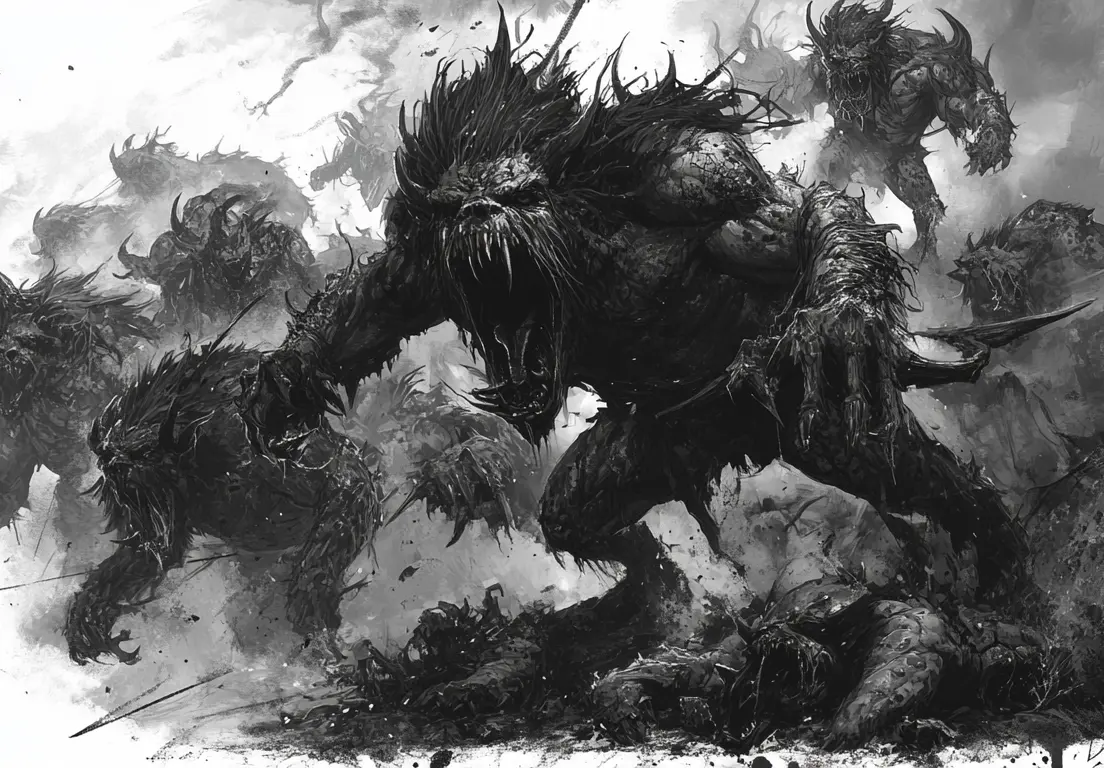
The Random Movement rule is one of the rules that has changed the most in Old World compared to previous editions, so if you’re a veteran player, this post is for you.
I’m going to talk about those changes and about the points where people usually have the most doubts or make the most mistakes when playing.
How far does a unit with Random Movement pursue or flee in Warhammer The Old World?
This is by far the most common mistake I’ve seen with this rule. I’ve seen more people get it wrong in games with Squig Hoppers, Mangler Squigs, and even Chaos Spawn.
If a unit with Random Movement flees or pursues, even if its Random Movement is 3D6, when it comes to pursuing or fleeing it moves 2D6 UNLESS it has Swiftstride.
There is absolutely nothing anywhere in the rulebook that says you use the Random Movement dice to determine flee or pursuit distance.
Nothing.
Can you Stand & Shoot against units with Random Movement?
This rule prevents the enemy from reacting to the charge. They cannot flee and they cannot Stand & Shoot. That makes these troops very strong for this kind of role: hunting down shooting units and missile troops.
Can troops with Random Movement march in Old World?
It’s important to stress that these troops never march. Marching is a manoeuvre, and the rule states that the only manoeuvre they can perform is Wheel.
Important implication: when you apply a -1 to Movement with certain spells, like the signature spell from Chaos Undivided, or something like Miasmic Mirage from Illusionism, these troops are never marching, so it usually affects them less.
If you reduce my Movement by 1 and I march, I’m effectively moving 2 inches less that turn because my reduced Movement is being doubled.
So yes, Miasmic Mirage reduces their Movement. But it doesn’t reduce them “to four,” it doesn’t stop them from marching, and it doesn’t stop them from charging. Because they never march and they never declare a charge in the normal way.
Can an enemy with Random Movement charge me if they can’t see me?
Yes. They cannot declare a charge, but they can end up in contact with you during a turn in which they did not see you at the start of their movement.
There is an important restriction, though
What they cannot do is contact you through an angle they couldn’t reach at the start of the turn. So if at the beginning they could only see your front, they cannot move in such a way that they end up contacting you in the flank or rear. (This restriction was added in the FAQs, and I’m glad it was.)
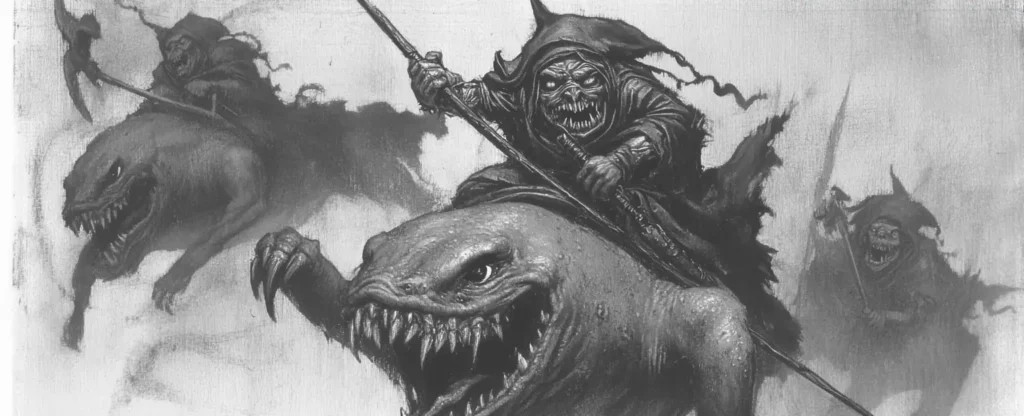
Synergies and anti-synergies of Random Movement
Strategic mistakes to avoid
They can work as screens, but they should not be screened by units that do not have Random Movement, simply because Random Movement units move in the Random Movement phase.
They move before the rest of your troops.
They don’t synergise well at all with units that move normally.
It would not be a good idea to have Squig Hoppers screened by, for example, Boar Boyz, Goblin Wolf Riders, or regular infantry.
Why?
Because the Hoppers must move first, and as they advance they would collide with the rear of the unit that is supposed to be screening them.
So it’s not optimal. Not even close.
And the reverse doesn’t work well either:
If you want to declare a charge with a normal unit (one without Random Movement), that charge happens before Compulsory Moves. Therefore, if you have a Random Movement “screen” in front, the unit behind won’t be able to charge because the screen will be in the way.
Synergy with terrain
There’s a huge synergy here that you need to understand.
If we are behind a forest with our Random Movement unit, the enemy unit on the other side cannot charge us because they cannot see us.
We, however, if we roll high enough, can charge them because we do not need line of sight.
So we have the advantage.
And if the dice roll is bad, lower than what we need, we can simply stay in position behind the forest and extend this situation for another turn.
On their turn, the opponent will only have two options: move into the forest and receive our charge, or fall back if they want to avoid our charge at all costs.
In combination with other Random Movement units
Used together, for example, Mangler Squigs screening Squig Hoppers work very well, because you can choose to move the Mangler first and then move the Hoppers behind it.
Covering your rear
These units are also very useful for protecting the rear of another unit.
For example, you can prevent light cavalry or flying units from positioning behind you for a combined charge next turn because, with a Random Movement unit that is also a Skirmisher (giving it 360-degree line of sight), if positioned correctly — in another post we’ll talk about how to position skirmishers to get full 360 vision or to deny charge angles in every direction, which is sometimes what we want — the opponent won’t risk putting themselves within reach of your Random Movement unit.
Protecting war machines
Another very interesting option is to use these units to protect war machines.
These units allow us to do something that can be quite dangerous in many armies: deploy war machines together.
While we all fear the classic domino effect where the enemy charges one war machine and then overruns through the rest in a line, a Random Movement unit with a long potential charge range can protect you quite well against ambushers and can keep enemy flying units at bay, keeping them away from your artillery.
Changes to the rule compared to previous editions (veterans, pay attention)
Finally, there’s one part of this rule I want to clarify for players coming from previous editions, such as 6th edition, where Random Movement was compulsory movement.
Before, it worked differently: you had to choose a direction first, roll the dice, and then move the full distance.
You were forced to move the full distance.
That’s no longer the case.
Now you roll the dice, and that is the maximum you can move.
Once you know the distance, you decide which direction to go.
This makes it infinitely better than it used to be.
Because now, if you want to, you can stay still.
For example, there’s a very common situation where staying still is exactly what we want.
I hope all of this helps you understand the ins and outs of the rule and use it better in your games (and stops people from trying to get away with 3D6 pursuit).
I’ll leave you some great posts here that might make you rethink a few rules I consider important if you want to improve at Warhammer The Old World.
Hordes of Chaos | New Army of Infamy | The March of Chaos Arcane Journal
NEW COMMON MAGIC ITEMS | Arcane Journal The March of Chaos
Warhammer Battle March: All the New OPTIONAL Content
Any errors in the post? feel free to reach out at theoldwarrior@theoldwarrior.com.