
“After deployment, units with this special rule may make a Vanguard move. A unit making a Vanguard move moves as described in the Basic Movement rules.
It may manoeuvre normally but cannot march. If both armies contain Vanguard units, a roll-off determines who moves first.
The players then alternate moving their Vanguard units one at a time, starting with the player who won the roll-off. Units that make a Vanguard move cannot declare a charge during their first turn.“
One of the Most Overrated Rules in the Game
On paper, the Vanguard move looks very strong. But after playing many games, I can tell you it’s far less impactful than it seems, since you cannot charge after making it.
Be careful: you can’t charge even if your opponent goes first, and that’s very restrictive. It’s something that also happens to Scouts (post about it, right here).
Let’s take a look at the problems with the rule and in which situations it’s actually useful.
Problems with “Vanguard” in Old World
In fact, in some situations the rule can even be counterproductive. Counterproductive because you move too far forward and the enemy knows that unit cannot charge.
And the fact that it can’t charge doesn’t just mean it can’t deal damage in combat — it also can’t declare a charge to clear the way for another unit behind it that wants to charge.
Because of this, the enemy can move aggressively into your threat range, if they go first, with complete certainty that you won’t be able to charge them.
That way, they’re basically guaranteeing themselves a charge on their next turn.
Another issue with the Vanguard move is that you must decide whether to use it before knowing who takes the first turn. In many cases, it won’t be in your best interest to use it, especially to avoid giving your opponent more advantage than you if they go first.
What Vanguard Is REALLY Useful For in Warhammer
Infantry with Vanguard
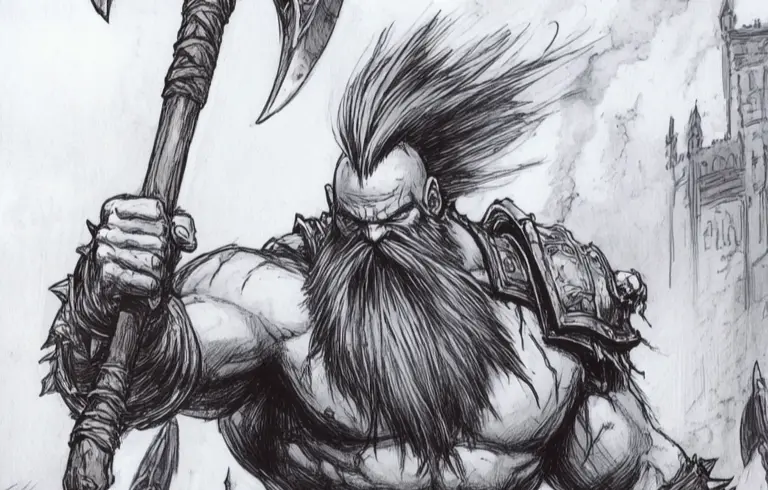
The kind of troops for which the Vanguard move can make sense: slow infantry like Dwarf Slayers. You already know they won’t be charging on turn one anyway, so what you’re trying to do is get them into position as soon as possible in order to take as few casualties as possible on the way in.
Objective Play
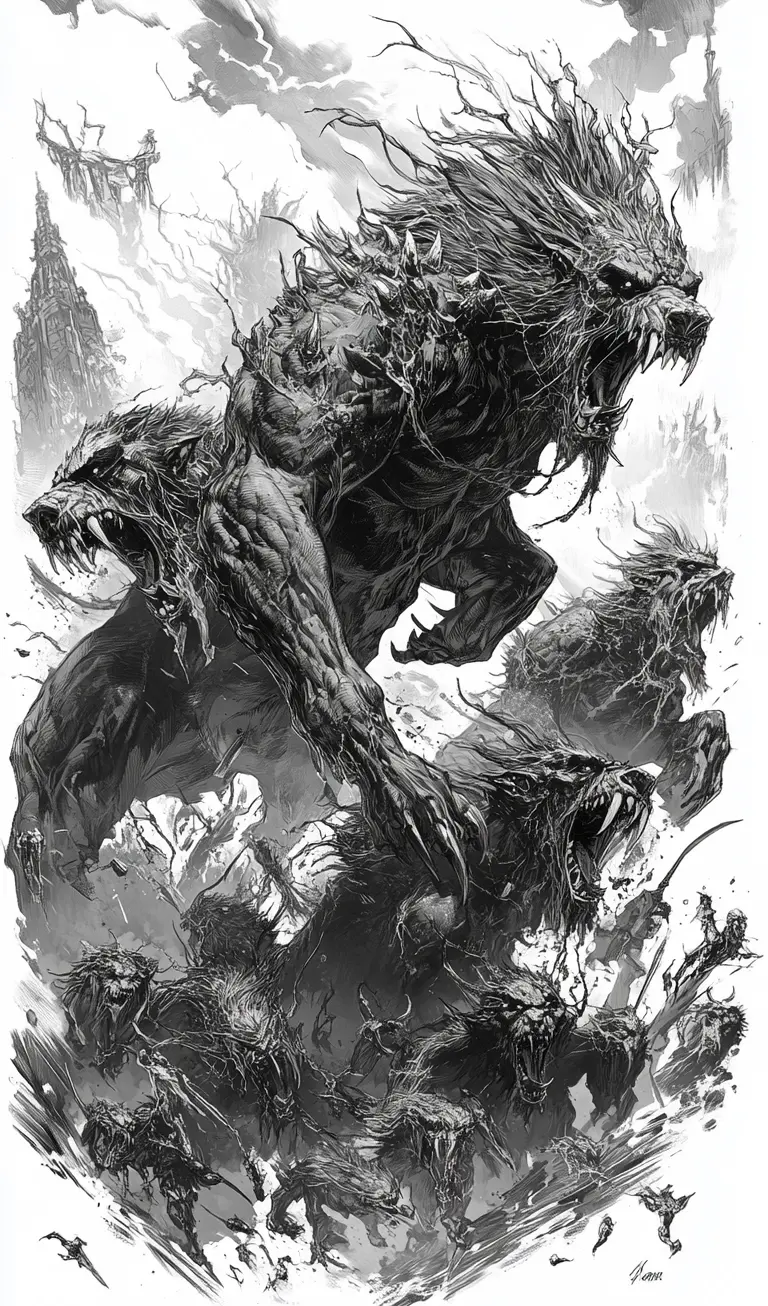
Another reason to use Vanguard is when you want to reach a specific point as quickly as possible. For example, if your opponent deploys their Baggage Train carelessly, far away from their main force, assuming you won’t reach it, a unit of Chaos Warhounds deployed in marching column using Vanguard can be very effective at destroying it quickly. In fact, you could destroy it on turn one, since that unit moves 7 during Vanguard and then marches 24.
Avoiding Frenzy
It can also be useful in some cases when you have a unit with Frenzy and you don’t want it to charge. You can use Vanguard to place a light unit slightly in front of the Frenzied one and prevent them from launching themselves forward recklessly.
That said, this is quite limited for the reasons mentioned earlier: the enemy can simply move right in front of you and secure the charge on the following turn.
A very common play has been using Chaos Warhounds to “tie up” a Khorne cavalry unit.
In reality, this doesn’t make much sense. It would be enough to deploy the Khorne cavalry slightly behind the Chaos Warhounds, so that one of the Warhounds’ corners blocks the front of the knights and prevents them from moving anyway — without completely giving up the possibility of declaring a charge (in this second case, you could simply charge with the Warhounds as well).
Redirectors
Another situation where it makes sense to use Vanguard is with a unit meant to redirect charges and pull enemy units out of position. For example, a light cavalry unit. It can use Vanguard to move further forward, get into a better position, or even move into a spot where it can maneuver and redirect enemy units without having to march — which means it could still shoot.
In any case, Vanguard in this edition is not something you automatically use just because the unit has it, nor is it something you should always use simply because you paid for it.
I hope this post helps you see the downsides of this rule and understand that many times your opponent uses it out of pure inertia (because they have it or paid for it) without realizing that it may actually benefit you as their opponent.
If this helped you, feel free to share the post and help your gaming community grow.
Chaos Dwarf Tier List for Warhammer The Old World (2026–2027)
Chaos Dwarf Old World List: WTC 2026 World Championship Winner
Hordes of Chaos | New Army of Infamy | The March of Chaos Arcane Journal
Any errors in the post? feel free to reach out at theoldwarrior@theoldwarrior.com.