
Fleeing is one of the aspects that has changed the most when moving from previous editions to Warhammer The Old World.
If you’re a 6th edition player, you’ll remember those games where a panic test could wipe out entire regiments that hadn’t even taken casualties beforehand. I’m glad to tell you that this is NO LONGER THE CASE.
In any case, we’ve gone from having two options — either you fled or you didn’t — to having more:
You can flee, you can fall back in good order, you can give ground… or you can stand your ground. That’s four options.
Let’s explain them properly, because a lot of people read the rulebook, still have doubts, and keep applying it incorrectly. This post comes from many situations I’ve seen in competitive events that cause confusion and mistakes, so it doesn’t happen to you.
Let’s get into it.
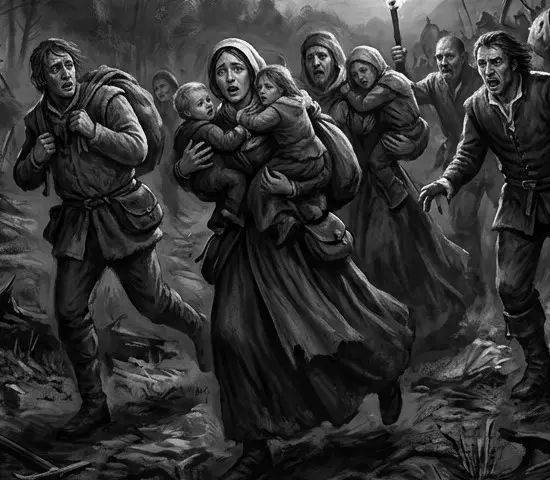
Important: there’s something common to all 3 types of fleeing we’re going to describe, and that is that the enemy can choose whether to pursue or not in all cases (unless forced to). If they choose not to pursue, they must take a Leadership test to remain where they are (and may reform in place).
As a general rule, in combat, there are 3 outcomes when you lose and take a Leadership test:
a) Your result is HIGHER than the base Leadership you’re using (for example: my Elven Spearmen Leadership 8 use the Leadership 10 of the nearby Elven Prince because he is the General, and I roll an 11). In this case, you flee normally.
b) Your result is equal to or lower than your base Leadership BUT combat resolution modifiers make you fail the test (those Spearmen with Leadership 10 suffered 5 casualties and you roll a 9). In this case, you fall back in good order (explained below).
c) You pass the Leadership test despite the negative combat modifiers (you give ground).
Fleeing
With standard fleeing, you move 2D6 (this distance increases to 3D6 if and only if you have the Swiftstride rule) in the direction opposite to the enemy causing the casualties. If it’s from shooting, you NOW do not wait until the end of the shooting phase to take the Leadership test — it is taken as soon as enough casualties are suffered.
The direction of the flee is directly away from the unit causing the casualties, from the center of their unit to the center of yours. In combat, you flee from the enemy unit with the highest Unit Strength.
A very important detail here is that in your next turn, if you are fleeing, you must take a Rally test. This test CAN HAVE modifiers: if you are at 50% of your starting models or below, you suffer -1 Leadership when attempting to rally, and if you are at 25% or below, you only rally on double 1.
This is very important and often forgotten, so it’s worth emphasizing.
Standard fleeing (the one we’re describing) is the ONLY option that requires a Rally test.
Strategic Fleeing in Warhammer The Old World
That said, you need to understand that fleeing is often actually beneficial. It allows you to reposition quickly, and the only restriction afterward is that you cannot charge. After fleeing, however, you can cast spells, march, shoot and, importantly, when you rally, you get a free reform before moving. This is a HUGE change compared to previous editions.
You can change formation from Skirmishers to Open Order, or adjust the number of models per rank. This means you can switch into Marching Column or, conversely, reform into a combat-ready formation to charge in the following turn.
Often, we switch into Marching Column to quickly reach a key area of the battlefield, like an objective. This allows a unit that has already fought and is no longer effective in combat to still be useful — capturing objectives, destroying supply objectives, or contributing Unit Strength to a quadrant in domination missions.
So you need to completely change your mindset: fleeing is not always a bad thing. That idea was deeply ingrained before, but now strategic fleeing is very real.
Failing Leadership Tests on Purpose
Let’s take it one step further.
When you have a Battle Standard Bearer, you can re-roll failed Break tests in combat.
Sometimes you might fall back in good order, but you’d actually prefer to flee further to execute one of these strategies. The Battle Standard Bearer allows you to re-roll, BUT you must keep the second result.
So, it all depends on your strategy, your army list, and the terrain.
What is Falling Back in Good Order?
Falling back in good order is still a form of fleeing (same direction as normal fleeing). However, instead of rolling 2D6 and adding them together, you roll two dice and take the highest result.
Additionally, you do not wait until your next turn to rally. Instead, the unit automatically rallies at the end of its movement. This means that even if the enemy catches you while pursuing, they instead make contact and remain engaged in combat.
Since the unit counts as rallied, you can reorganize again: ranks, number of models per rank, formation (Close Order, Open Order, Skirmishers) and facing.
The New “Hammer and Anvil” Strategy in Old World
Just like with normal fleeing, if you pass through a friendly unit while falling back in good order, you cause Panic. If your movement would place you on top of that unit, you pass through it completely and end up just behind it.
However, the enemy pursuing you cannot move through that friendly unit. This means your unit is effectively protected if you position another unit behind it.
So, you can charge with a damage-dealing unit, even knowing it will lose combat, and place a durable “anvil” unit behind it. When the enemy pursues, they will be stopped by that unit.
If they don’t pursue, many infantry units will struggle to reposition and may not be able to avoid your charge in the following turn.
Also remember: since a unit that falls back in good order rallies automatically, it CAN charge in its next turn. That’s the key difference compared to normal fleeing.
But be careful:
If you attempt to fall back in good order against a unit with more than double your Unit Strength, it automatically becomes a flee instead.
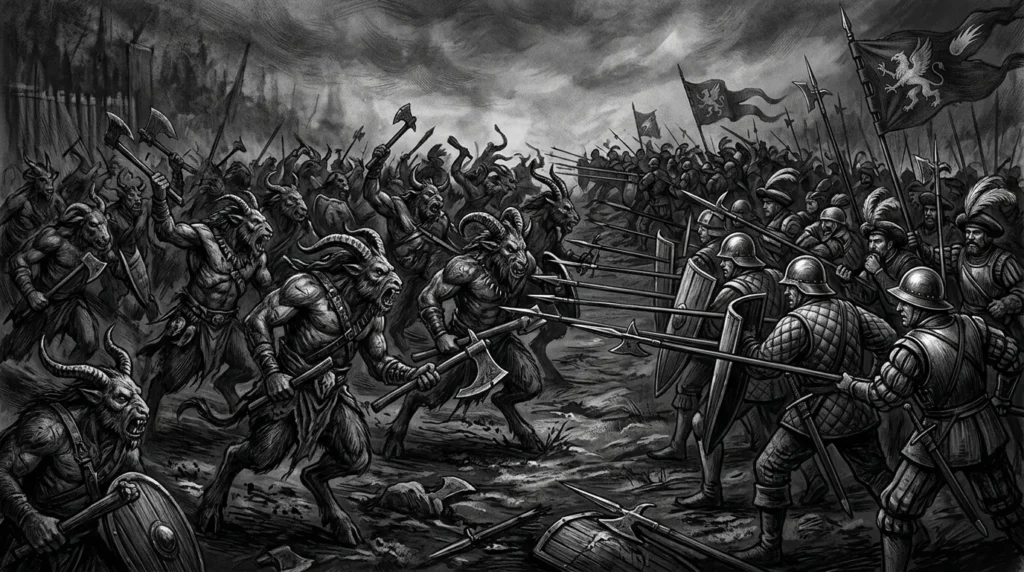
Giving Ground
If your unit in combat passes its Leadership test despite negative combat modifiers, it gives ground 2 inches backwards.
This is a major change compared to previous editions, where passing the test meant you stayed in place.
This gives the enemy options to reorganize or disengage.
However, you can prevent this if you plan correctly, as explained in the Unbreakable rule.
Important: giving ground only happens in combat, not against shooting.
When giving ground you dont change your facing, just 2 inches bacwards.
The direction when there are more than 1 enemy unit is the middle point between them.
Conclusions
That’s everything you need to know about this rule.
What used to be limited to light cavalry can now be done by almost any unit.
Many players feel light cavalry is less impactful now, as movement differences are smaller.
Warhammer has tried to compensate by giving them Skirmishers and Quick Shot, among other tools.
This has made them more differentiated than in previous editions.
Thanks for sharing these posts with your community.
See you in the next one.
Warhammer The Old World Rules Guide: Updated and Fully Explained

Learn the BEST strategies with “Unbreakable” in Warhammer The Old World

Battle March Rules | Warhammer: The Old World | New Skirmish Mode Explained
THE BEST Magic Lore for Beastmen in Warhammer The Old World
THIS is how Cover Modifiers work in Warhammer Old World
How does line of sight EXACTLY work in Warhammer The Old World?
Any error in the post, feel free to reach out at theoldwarrior@theoldwarrior.com.