
When this lore came out, it immediately caught my attention. I liked it a lot, because it focuses heavily on enemy Leadership (without needing to be Undead) and movement phases.
Very tactical.
It appeared with the Arcane Journal of the Beastmen in mid-2025, and it can only be taken by Beastmen in the Army of Infamy Wild Herd initially, although Shamans from the Grand Army and the Minotaur army can also access it by buying an item called Goretooth for 15 points.
In any case, let’s go through it spell by spell and see where it shines and where it falls short.
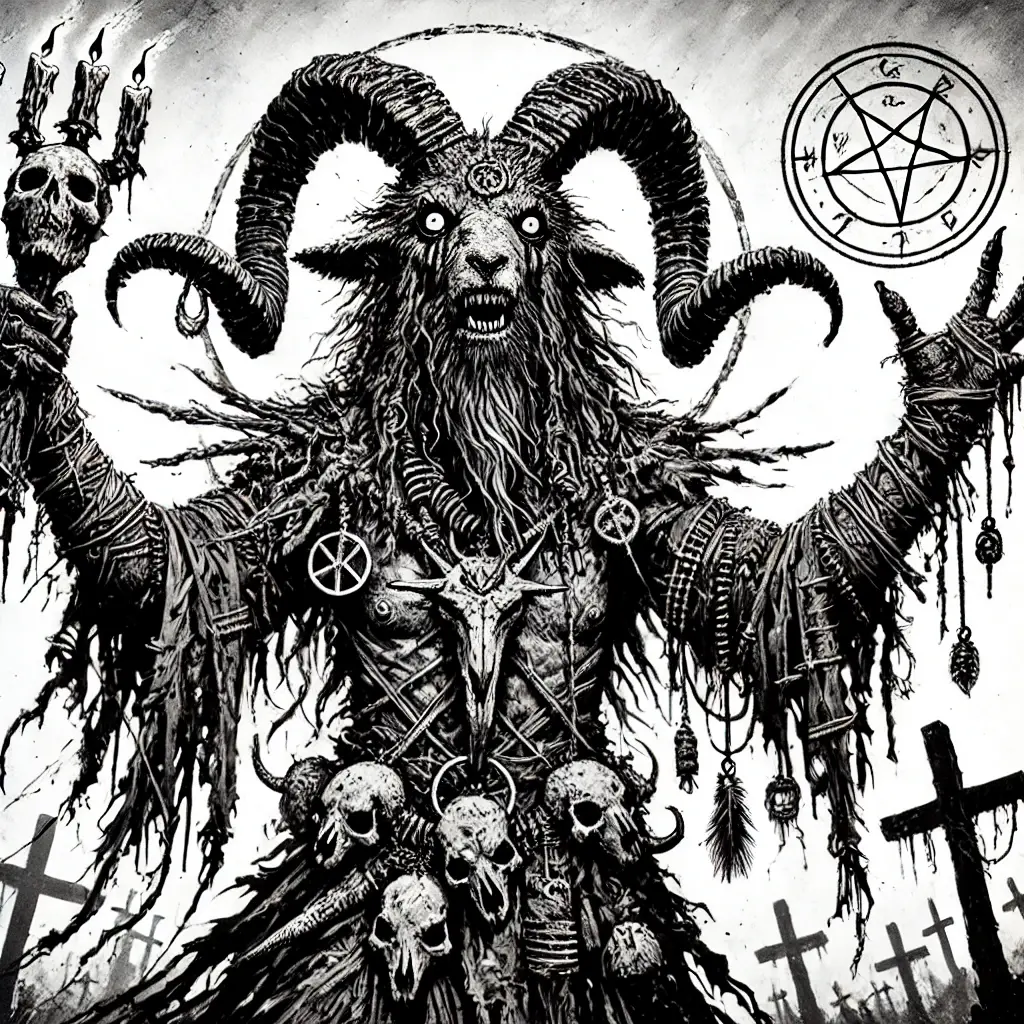
Let’s start with the Signature Spell, Primordial Gloom.
Primordial Gloom (Signature Spell)
It has a casting value of 9 and remains in play. It places a small template within 12″, and instead of dealing direct damage, everything within 6″ suffers -1 Leadership and treats all open ground as difficult terrain.
At first glance, this might not seem like much—just -1 Movement and -2 when marching—but in reality it’s very strong. When an enemy unit charges across open ground, it must pick the lowest dice instead of the highest.
On top of that -1 Movement.
Also, units in Close Order do not gain rank bonuses if they are fighting in difficult terrain, so this doesn’t just help prevent charges, it also affects ongoing combats.
The impact this can have, and the disadvantages it can cause to an important enemy combat unit—potentially avoiding them to combat or making it lose combats—is huge.
Imagine what an Empire unit with the Griffon Banner suffers, losing its main counter to difficult terrain and being unable to count ranks.
Lastly (not a very powerful thing), if an enemy moves through the template, it counts as dangerous terrain.
A fantastic spell to start with. Let’s see if the rest of the lore keeps up.
1 Call of the Wild
Casting value 8. It gives any cavalry or infantry unit—which is basically everything in Beastmen, except chariots, monsters and Razorgor—a Reserve Move.
I explained Reserve Move in detail in another post, but here it’s important to highlight that, within the Beastmen army, this is the perfect tool for a mobile shooting unit.
And you might say: “But Beastmen don’t really have a strong mobile shooting unit.”
True—but you can build one by running multiple wizards that cast magic missiles, like those from Elementalism, or simply using Viletides.
I’ll talk more about that in my post about the best lore of magic for Beastmen.
This spell allows you to move into range, cast magic missiles, and then move back out of enemy range—or move, cast, and keep advancing (which synergizes very well with a Gor death star).
There’s also a more situational use: casting it on a unit that has just arrived from Ambush.
These units usually move very little, stay close to the board edge, and are easy to force off the table. Remember they cannot march and must deploy with their rear touching the board edge.
With this spell, they can move further away from the edge, making them much harder to remove.
2 In the Gloaming Wildwood
This spell has the highest casting value in the lore (10) and remains in play.
That means the opponent gets another chance to dispel it at the start of their turn.
It’s a hex that makes the enemy unit Fear all your units—and if your unit already causes Fear, the enemy instead suffers Terror.
This is quite interesting for forcing larger enemy units to flee using very small units—for example, charging with a Razorgor.
A Razorgor causes Fear, and with this it would cause Terror.
A 54-point unit causing Terror and charging with Swiftstride forces a test on the enemy unit (remember Terror doesn’t depend on Unit Strength), potentially making it flee, redirect charges, or force multiple Terror tests.
Pretty interesting.
Outside of that, it doesn’t offer much else.
The main issue is its range: only 15″, just like most spells in this lore.
As you can see, so far there’s no direct damage—just tactical, movement and Leadership-based spells.
3 Flock of Doom
This is the combat spell.
Casting value 8, but it’s basically a worse version of the Orc equivalent.
It places a small template on the enemy unit, scatters D3+1, and deals Strength 3 hits with no AP and Multiple Wounds (2).
“But Multiple Wounds (2) is great!”
Sure—but first you have to hit (with partial hits on 4+), then wound with Strength 3, and then the enemy still has armor, regen…
In a meta where large infantry blocks are rare and bases are bigger, this spell is terrible.
4 Fury of the Beast
Gives the unit the ability to fight in an extra rank.
The problem: it’s self-range, affecting only the caster’s unit.
Even though it’s not technically a combat spell, in practice it is—because it has no other use.
It’s interesting (for other armies), but honestly, if the previous spell wasn’t so bad, this would be the worst in the lore.
For Beastmen, who often use two hand weapons and only get one supporting attack from extra ranks, this has very little value.
Maybe it works with Bestigors or Centigors if you build around it—but that’s about it.
That’s 2 bad spells out of 4 so far. Let’s continue.
5 Strangle Root
A magic missile.
Casting value 8, range 4D6, Strength 3.
It works like the Skaven Warp Lightning Cannon—draw a line and everything under it takes hits.
Same here, with an average range of 14″.
Each model hit takes D3 Strength 3 hits with AP -2.
It’s just bad.
Even with multiple hits, it’s still Strength 3.
I’m not risking my caster just to cast this—unless I combine it with Reserve Move from Spell 1 to get back to safety.
Alright.
One spell left. Will it save the lore?
6 Neath the Shaden Wodespan
The second vortex in the lore and the third Remains in Play spell.
Higher casting value means harder to dispel.
A vortex cast on 10 is actually quite hard to dispel, especially if placed out of range.
It places a large template at 15″ that doesn’t move and has several effects with no real synergy between them:
- It blocks line of sight. Similar to Illusion, preventing charges.
- All enemies within 6″ suffer -2 to their Ballistic Skill.
- Any enemy ending movement within 3″ must take a Panic test and flee if failed.
Flee—not Give Ground or Fall Back in Good Order. This is dangerous. This is not Dark Magic Phantasmagoria.
Final Thoughts
So, Primal Magic:
Is it good?
No.
Why?
Because it has some interesting spells—but others are just bad and very situational.
If another army without access to stronger lores had this, it might make sense.
But here, the best effects rely on Leadership—like Terror or forcing flee—and armies like Vampire Counts or Tomb Kings are completely immune.
So in those matchups, you’re stuck with the bad spells.
Also, the range is terrible across the board.
Unless you build specifically around this lore, you’ll spend the first few turns out of range of key targets.
And if you don’t get Reserve Move, the moment you step forward to cast, you’ll get charged.
Where could it work?
Reserve Move does make sense in a Viletides unit—cheap, flexible, able to switch between skirmish and Open Order.
This spell can also be taken as a bound item (Power Level 2) for just 25 points.
Start as skirmishers for line of sight, move, cast, then reform into Open Order if you can’t fully escape charge range.
Why?
So if the enemy charges, you can flee and rally using Warband Leadership bonus.
With a musician, even better.
You can reliably rally on Leadership 10—and when you rally, you go back to skirmish formation.
So… is Lore of Primal Magic worth it?
No.
But you know what is worth it?
Sharing the blog with your community.
It helps them—and it lets me keep creating content.
I’ll also leave some other posts below that are worth checking out.
See you in the next one.
Ambushers in The Old World

Warhammer The Old World Reserve Move

Battle March Rules | Warhammer: The Old World | New Skirmish Mode Explained
Scouts in The Old World | Best deployment ever?
Is Vanguard useful? Warhammer The Old World
Army of infamy that is ACTUALLY good? Cathay Warriors of Land and Field
Any error in the post, feel free to reach out at theoldwarrior@theoldwarrior.com.