


With every new Old World update, whether it comes through FAQs or new Arcane Journals, armies receive changes that are usually positive. And this time, it’s the Wood Elves’ turn.
The new Arcane Journal: The River of Bones introduces six Kinbands, which are simply additional special rules we can buy for certain units of Elves. And I’m emphasizing Elves here, because these upgrades aren’t intended for our trees.
They’re similar to the tribes and mutations for Chaos Marauders that appeared a couple of Arcane Journals ago, and they’re particularly interesting because we can combine them with the magic arrows Wood Elves have always had.
But those aren’t the only additions. We’re also getting two new gigantic Treemen, one more focused on close combat and the other on magic, giving us new options when building army lists.
We’re going to analyze all six Kinbands, what each one offers, which ones can produce interesting combinations, and which ones are complete garbage. Then we’ll look at what the new Treemen offer and how they might affect our lists.
As always, let’s get straight to it!
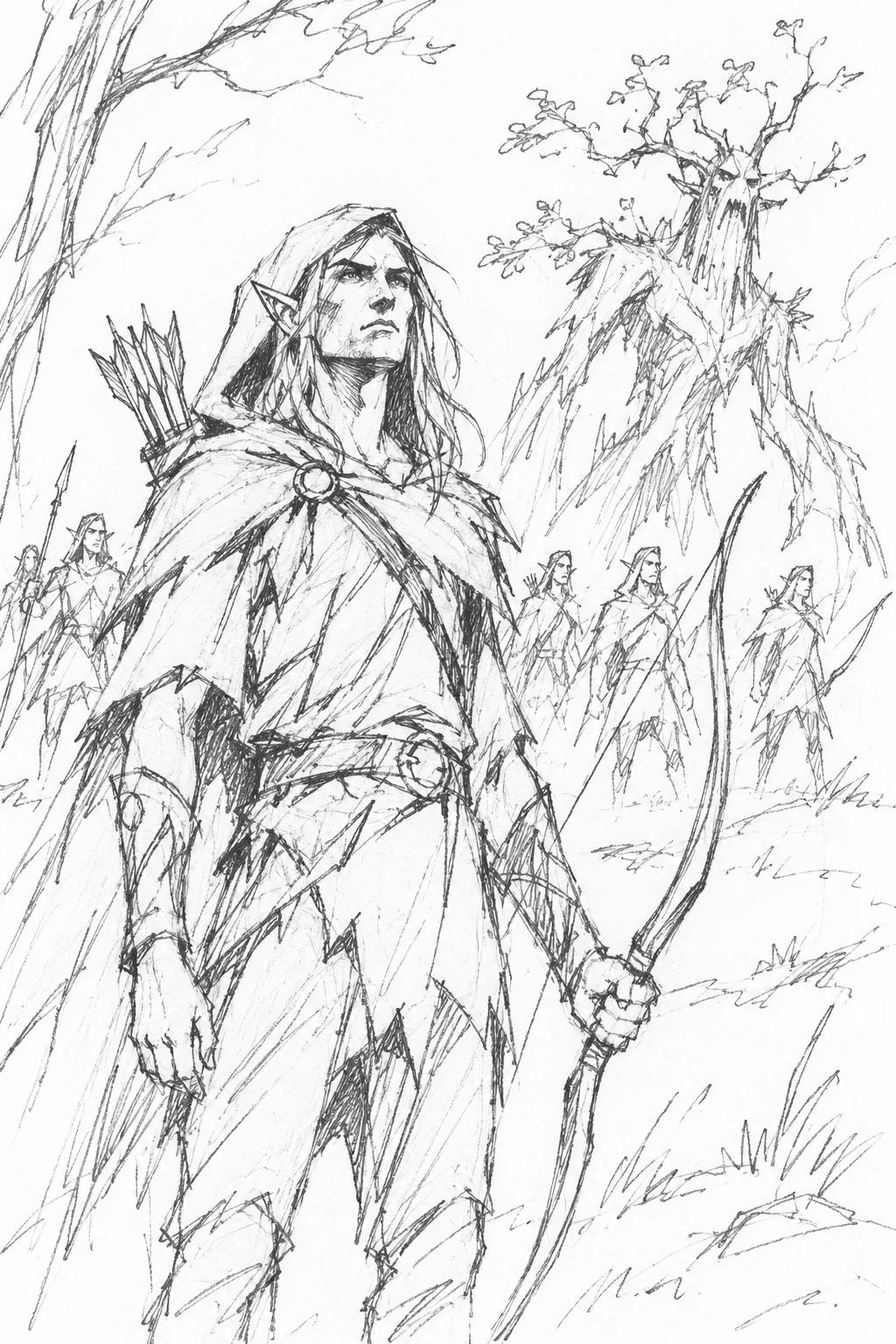
New Wood Elf Kinbands in Arcane Journal: The River of Bones
Which units can use Kinbands?
Any Wood Elf army, whether it’s a Grand Army or an Army of Infamy, can use these new Kinbands.
However, they’re limited to five specific units:
- Glade Guard.
- Eternal Guard.
- Deepwood Scouts.
- Wildwood Rangers.
- Glade Riders.
In other words, regular Elf units. Neither Sisters of the Thorn nor Wild Riders can use them, for example.
Also, each unit can only purchase one Kinband, so we’ll have to choose the one that best suits its role in the army.
There are six different options, some with a fixed cost per unit and others with a cost per model.
Let’s go through them one by one.
The Kinbands Of Cavaroc — 15 points per unit
The unit gains the Vanguard special rule and increases its Movement characteristic by 1.
If it’s a mounted unit, its mounts also receive that +1 Movement.
One possibility that comes to mind for Glade Riders is that, instead of having to deploy them in Marching Column, you could deploy them in their normal Skirmish formation and use this Vanguard move to reach and smash an enemy chariot on the first turn if your opponent isn’t paying attention.
But your opponent usually isn’t stupid and can easily spot this combination.
I also have to say that it isn’t cheap.
We’re talking about 15 points for a unit we usually keep fairly small: four or five models in the case of the riders.
That works out to roughly three extra points per model, which is quite a lot.
Although things might change if we want to use this Kinband on a combat unit, such as Wildwood Rangers or Eternal Guard, and get it to the enemy as quickly as possible.
That initial Vanguard move, combined with +1 Movement and the subsequent march move, could put the unit very close to combat by turn two, easily within charging distance.
It could work in this second case, but there’s something very important to keep in mind.
As I explained in my article on the Vanguard move, which I’ve linked here, this rule can really backfire.
My analysis of the Vanguard rule
Depending on your opponent’s list, if we make our Vanguard move and the enemy then goes first, they can use cavalry or another very fast unit to position themselves right in front of us.
And we won’t be able to charge them.
Why? Because the Vanguard move rule itself prevents it.
The enemy can march right in front of our unit and leave us sitting ducks.
It’s a rule you have to be extremely careful with in this edition.
In any other case, for scouts or archers, I don’t think taking this Kinband is a good idea.
Because it makes the unit considerably more expensive, and I don’t think they’ll get much out of it.
The Kinbands Of Argwylon — 10 points per unit
The unit gains Magic Resistance (-1).
I don’t want it, I don’t like it, and I’d never take it.
The Kinbands Of Atylwyth — 2 points per model
This lets you re-roll any natural rolls of 1 To Hit, both during the Shooting phase and in close combat.
However, if one or more units in our army take this Kinband, we cannot include more than one unit with the Forest Spirit special rule per 1,000 points.
I think this is a good combination for archers with poisoned arrows, which would be the most basic option and the most obvious combo.
But I also think it has very good synergy with the magic arrows that let us ignore cover.
With those arrows, we’ll normally have a fairly high hit rate, hitting on a 3+ or 4+, and the failed rolls we can re-roll thanks to this Kinband will considerably improve our shooting efficiency.
Either way, we also need to look at our combat troops, because we re-roll those 1s in close combat too.
A unit with Weapon Skill 5, like our Elf combat units, can make very good use of this rule.
For the same reason I explained earlier, re-rolling 1s increases our hit rate.
And if they also have an easy time wounding the enemy, as our Elves equipped with great weapons do, they could pack a real punch in combat.
The problem is the same as always.
We keep piling on special rules and upgrades, and our troops get pretty expensive while still being Toughness 3 Elves with practically no protection.
The combination with Glade Riders
There’s another interesting possibility we shouldn’t overlook: using this Kinband on our Glade Riders.
Under the general rules, when a rider has a special rule, their mount can also benefit from it unless stated otherwise.
No exception is specified here, so the horses should also be able to re-roll 1s To Hit in close combat.
That makes this combination particularly interesting.
Because we’re not just re-rolling 1s for the riders’ own attacks, which also benefit from their spears, but for their horses’ attacks as well.
In other words, we’re getting value from this Kinband on far more attacks than we might initially think.
And that could make this combination pretty interesting on a unit of Glade Riders.
The Kinbands Of Modryn — 2 points per model
This lets you re-roll natural rolls of 1 To Wound during the Shooting phase.
Unless you want to combine these re-rolls with lots of Forest Spirits, I would always choose the Kinband I described above.
I prefer re-rolling 1s To Hit over re-rolling 1s To Wound. Always.
Besides, they cost exactly the same.
And the one that lets you re-roll 1s To Wound only works during the Shooting phase, while the previous one also works in close combat.
Even if you put it on one of your shooting units, the circumstances of a game will sometimes force those units into combat.
And being able to re-roll 1s To Hit can help them in those situations too.
Either way, I don’t like it.
Compared with the previous one, I think it’s pretty bad.
The Kinbands Of Cythral — 1 point per model
The unit automatically passes any Dangerous Terrain tests it has to take.
It also gains a 5+ Ward save against wounds caused by enemy units whose troop type is Monster.
That’s interesting, although I think it’s too situational.
But regardless of how situational it might be, a unit of Elves with great weapons, this Kinband, and the Monster Hunter’s Tapestry banner, which prevents the enemy from making Stomp Attacks against it, could be pretty tough to deal with.
And it could tear apart plenty of monsters.
Because remember, our Wildwood Rangers already have their own built-in rules for fighting monsters, so this combination could make them even better at that job.
It could be an interesting combo.
For the other units, I generally don’t think it’s particularly useful.
As Wood Elves, we have plenty of mobility and can usually avoid enemy monsters pretty well.
On the other hand, there are monsters we can barely avoid at all, and they’re the ones that get to choose which unit they want to fight.
And in that case, why would they go after a unit with this Kinband when they could target a similar one without it?
Ultimately, practically all our Elf units that can buy this upgrade have similar defensive stats.
So the enemy monster can look for another unit that doesn’t have that 5+ Ward save.
For all those reasons, I think it’s too situational, although combining it with Wildwood Rangers and the banner that prevents Stomp Attacks does have some appeal.
The Kinbands Of Torgovann — 1 point per model
This lets you choose a non-magical close combat weapon used by the unit and improve its Armour Piercing by 1.
And I’m emphasizing close combat weapon here, because we can’t use this upgrade on a bow.
If we could combine this Kinband with Wardancers, it would be very good.
In fact, if the earlier Kinband that lets you re-roll 1s To Hit could also be used on Wardancers, that would be very interesting too.
But the fact is, we can’t do that.
So my first choice is Wildwood Rangers.
Our Rangers would go from AP -2 to AP -3 with their weapons.
Pretty interesting.
But we’re back to the same issue: the unit keeps getting more expensive.
Either way, we’d have to choose between this Kinband and one of the earlier ones.
I’d probably choose this one over the one that gives a 5+ Ward save against monsters, simply because it’s much more versatile.
Although I’d like to try both.
Ultimately, keep in mind that even with Movement 5, we often don’t get to choose our fights when we’re using an infantry block with that Movement.
So if we specialize too heavily against monsters, cavalry or other enemy troops can still do a lot of damage to us.
With this Kinband, though, we improve our offensive capabilities against different types of enemies.
Not just monsters, but cavalry and other heavily armored troops too.
That increase in Armour Piercing lets us do plenty of damage to a wider range of targets.
I think it’s interesting.
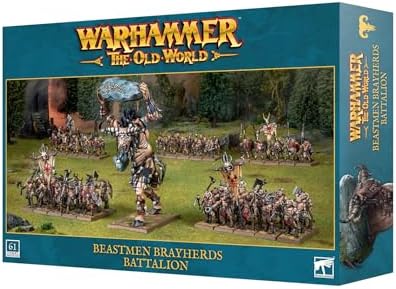


New Giant Wood Elf Treemen: Gargantuan Treeman and Gargantuan Treeman Ancient
Besides these new Kinbands, Arcane Journal: The River of Bones introduces two new monsters for the Wood Elves.
As you know, they’ve also released a new Army of Infamy, Spirits of the Forest, focused mainly on Forest Spirits, Dryads, and other tree creatures.
But these two new gigantic Treemen can also be used in other Wood Elf armies.
One is more focused on close combat, the Gargantuan Treeman, while the other, the Gargantuan Treeman Ancient, is more focused on magic.
And there’s an important difference when building our lists: the Gargantuan Treeman is a Rare Unit, while the Gargantuan Treeman Ancient is a character.
Gargantuan Treeman — 300 points
The Gargantuan Treeman is the version more focused on close combat.
And honestly, I think it’s more interesting than the magic-focused version.
Because although the other one has a larger shooting template, this one has two extra Attacks and one more point of Weapon Skill.
And ultimately, we’re talking about a creature we want to get into combat.
That doesn’t mean it can’t do other things while it’s approaching the enemy.
In fact, one of the big advantages of these new Treemen is that they also have a ranged attack similar to a stone thrower’s.
The Gargantuan Treeman uses a three-inch template.
That lets it keep shooting as it advances toward the enemy, instead of standing around like an idiot every turn it hasn’t managed to get into combat yet.
It can also move, march, and shoot, which I think is pretty interesting.
In fact, being able to march and shoot would be very useful for the Orcs and Goblins’ Arachnarok Spider.
But since it can’t do that, this is precisely one of the reasons many Orc generals stop taking it in their armies.
And there’s another important point: the Gargantuan Treeman is also a Level 1 Wizard.
Even though it isn’t the magic-specialist version, this lets us attempt to dispel enemy spells.
And that’s great.
Obviously, if the enemy has a Level 3 or Level 4 Wizard, they’ll have a significant advantage when casting their spells.
They could have a +2 advantage over us, along with other bonuses from certain items, such as the Beastmen’s Herdstone.
We’ll only be adding our +1, and we’ll also need to beat their casting result to dispel it.
But it’s always good to have more tools for trying to dispel enemy spells.
Gargantuan Treeman Ancient — 325 points
The Gargantuan Treeman Ancient is the more magic-focused version.
However, I have to say that I don’t think it’s particularly good at that either.
Because it can’t become a Level 3 or Level 4 Wizard, which would be the really interesting option for a creature like this.
The good thing is that it has a ranged attack similar to a stone thrower’s, with a Strength 6 hit under the central hole.
So it’s an attack intended more for fighting regiments than large enemy monsters.
And its main advantage over the Gargantuan Treeman is that it uses the five-inch template, while the combat version uses the three-inch one.
But honestly, I don’t think that advantage comes anywhere close to making up for its drawbacks.
Because we’re talking about a creature with two fewer Attacks and one less point of Weapon Skill.
And ultimately, however much it can shoot while advancing, we’re using a model that we want to get into close combat.
So I don’t think a larger template makes up for that loss of offensive power.
Also, we need to remember that the Gargantuan Treeman Ancient is a character.
That’s particularly important when we want to build an army with several large monsters, because it doesn’t come out of the same allowance as the regular Gargantuan Treeman.
Toughness, saves, and the new Treemen’s main weaknesses
Either way, whichever one we prefer, we should be happy that these creatures are joining our army.
But there are also some problems we shouldn’t overlook.
First, we’re talking about monsters with Toughness 7, seven Wounds, a base 4+ armor save, and Regeneration (5+).
That makes them pretty durable creatures.
Also, both finally have D6 Stomp Attacks, unlike the smaller Treemen.
And both have the Unbreakable special rule, so they won’t flee after losing combat.
That makes them pretty reliable monsters, because we won’t risk losing such an expensive creature simply because of a bad Break test roll.
However, they also have an important drawback.
Their base measures 150 × 100 mm.
That’s a huge base.
And when you have a creature with Movement 5 that can’t fly and uses a base that large, maneuvering can be pretty difficult depending on the situation.
You have to be very careful with that.
Also, the Gargantuan Treeman costs 300 points, while the Gargantuan Treeman Ancient starts at 325 points.
And those costs can go up because we can add Spites and other upgrades.
Spites let us improve both their armor save and their regeneration.
That lets us build even tougher monsters.
And if we add Unbreakable to all that, we get some pretty interesting creatures: great staying power, and the peace of mind that we won’t lose them to a bad roll after a fight goes against us.
How to combine the new Treemen with dragons and other Forest Spirits
To wrap up these additions, there’s one possibility that comes to mind that could be pretty interesting when building our lists.
We now have access to new Toughness 7 monsters that, in the regular Gargantuan Treeman’s case, don’t use up our character allowance.
So we can build an army with one or even two dragons alongside these new gigantic Treemen.
And if you remember, one of the latest updates also increased Treekin’s Toughness from 5 to 6.
So we can build a seriously durable army, with a huge number of units at Toughness 6 or higher.
An army that, while it generally won’t advance particularly quickly, could be very hard to destroy once it reaches close combat.
This playstyle also works particularly well with my favorite Wood Elf magic arrows.
As I explained quite a while ago in my article analyzing all this army’s arrow types, which I’ve linked here:
The best arrows for Wood Elves
We have arrows that let us ignore the enemy’s cover.
That lets us keep a line of archers in our backfield, or use it to control objectives, while our trees advance toward the enemy.
And even if those trees partially block the enemy units we want to shoot at, our arrows let us ignore that cover.
Cover that would often give us a -1 or even -2 modifier To Hit during the Shooting phase.
That way, we can combine a line of durable monsters and tree units advancing into combat with archers that keep providing effective shooting from our backfield.
That could be a pretty interesting combination.
Conclusion
With these new rules, the Wood Elves get six Kinbands that let us customize certain Elf units, combine them with our magic arrows, and improve some of their combat capabilities.
I don’t find them all equally interesting.
Some are too expensive or situational, while others, like the ones that let us re-roll 1s To Hit or increase our Wildwood Rangers’ Armour Piercing, could produce some pretty interesting combinations.
And on top of all that, we have the new Gargantuan Treeman and Gargantuan Treeman Ancient.
Personally, I find the first one more interesting, both for its combat abilities and because we can take it without using up our character allowance.
Especially since we can now build lists with dragons, gigantic Treemen, and Toughness 6 Treekin, creating an army with some serious durability.
And if we combine all that with our cover-ignoring arrows, we can keep our archers shooting from the backfield while our monsters advance toward the enemy.
We’ll have to test these combinations on the table to see just how effective they are, but we definitely have new possibilities for building our Wood Elf lists.
Any errors in the post? feel free to reach out at theoldwarrior@theoldwarrior.com.